
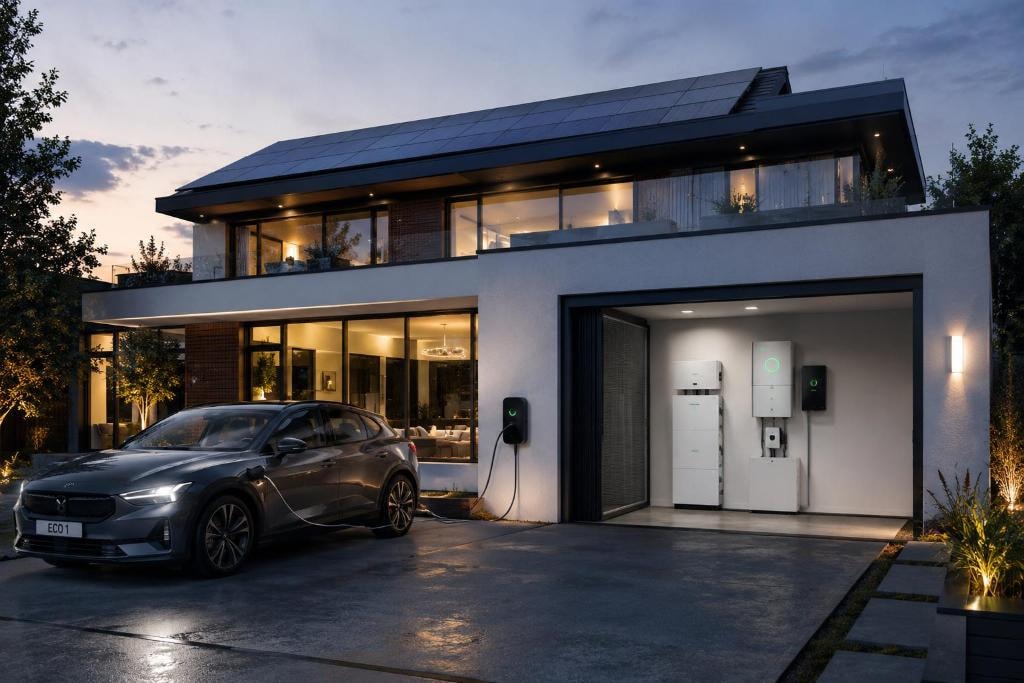
Beyond Photovoltaics: The Future of Intelligent Energy Management in Cyprus
Discover why the integration of photovoltaic systems, battery energy storage and intelligent Home Energy Management Systems (HEMS) is becoming essential for modern energy-efficient buildings in Cyprus.
Cyprus is undergoing a significant energy transformation. The rapid expansion of photovoltaic installations, increasing solar energy curtailments and the transition towards new electricity compensation mechanisms are changing the way we approach energy investments.
For many years, the primary objective was to produce as much renewable energy as possible. Today, the challenge is different. How can we maximise the value of every kilowatt-hour we produce? The answer lies in the integration of energy production, energy storage and intelligent energy management.
Photovoltaic systems generate their maximum energy during daylight hours, particularly around midday. However, residential electricity consumption often peaks during the morning and evening, when solar production is limited or unavailable. This creates an imbalance between energy production and actual demand.
Without an effective energy management strategy, buildings may export surplus electricity during the day while purchasing electricity from the grid during the evening. In Cyprus, increasing restrictions on renewable energy exports make addressing this imbalance even more important.
Battery Energy Storage Systems (BESS) allow surplus photovoltaic energy to be stored and utilised when the building needs it. A correctly engineered storage system can contribute to increased photovoltaic self-consumption, reduced electricity imports from the grid, better utilisation of renewable energy, reduced exposure to changing electricity tariffs, greater energy independence, and backup power capabilities where supported.
However, installing a battery alone does not necessarily guarantee optimal energy performance. The real value comes from how intelligently that energy is managed.
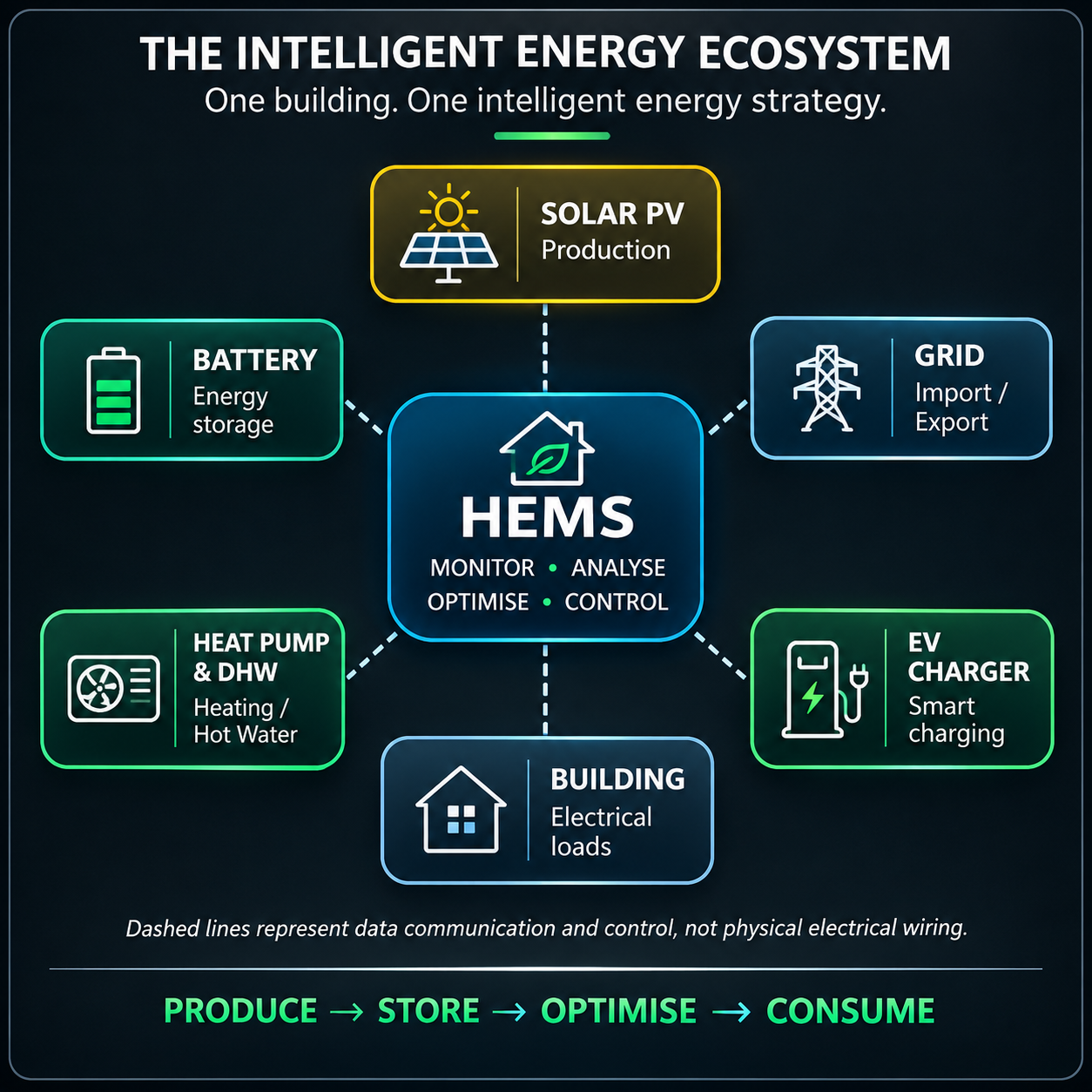
A Home Energy Management System (HEMS) acts as the central intelligence of a modern energy-efficient building. Rather than allowing each electrical system to operate independently, HEMS monitors, coordinates and optimises the interaction between photovoltaic systems, battery energy storage, heat pumps, air conditioning systems, domestic hot water production, electric vehicle charging, electrical appliances and the electricity grid.
An advanced HEMS can use real-time consumption data, weather forecasts, battery availability, user preferences and electricity tariffs to determine when and how energy should be utilised. The objective is simple: use the right energy, at the right time, at the lowest practical cost.
Consider a modern residential building in Cyprus. During the morning, the photovoltaic system begins generating electricity to cover the building's immediate requirements. As solar production increases, the HEMS can coordinate battery charging, domestic hot water production and the operation of the heat pump.
During periods of surplus production, additional energy can be directed towards electric vehicle charging or other flexible electrical loads. In the evening, stored energy becomes available to support the building's electricity demand, reducing dependence on the grid. All these operations can be coordinated automatically, within the capabilities and limitations of the installed equipment. The building becomes an integrated energy ecosystem rather than a collection of independent electrical systems.
One of the most common mistakes in energy storage investments is selecting equipment before understanding the building's actual energy requirements. A professional energy system design should consider annual and hourly electricity consumption profiles, photovoltaic generation capacity, battery usable capacity and charging and discharging power, system efficiency and equipment compatibility, heat pump and electric vehicle charging requirements, electricity tariffs and grid connection restrictions, future expansion requirements, and financial performance and lifecycle costs.
There is no universal battery capacity or energy management configuration suitable for every building. Every building requires its own engineered energy strategy.
The next generation of buildings will not simply consume less energy. They will actively manage when energy is produced, stored, distributed and consumed. The integration of photovoltaics, battery storage, heat pumps and intelligent energy management represents a fundamental shift towards more efficient, resilient and sustainable buildings.
At N.A.S.C. Energon Solutions Ltd, our engineering philosophy is based on understanding the building as a complete system. We believe that the future of energy is not defined by individual products, but by how effectively these technologies work together.
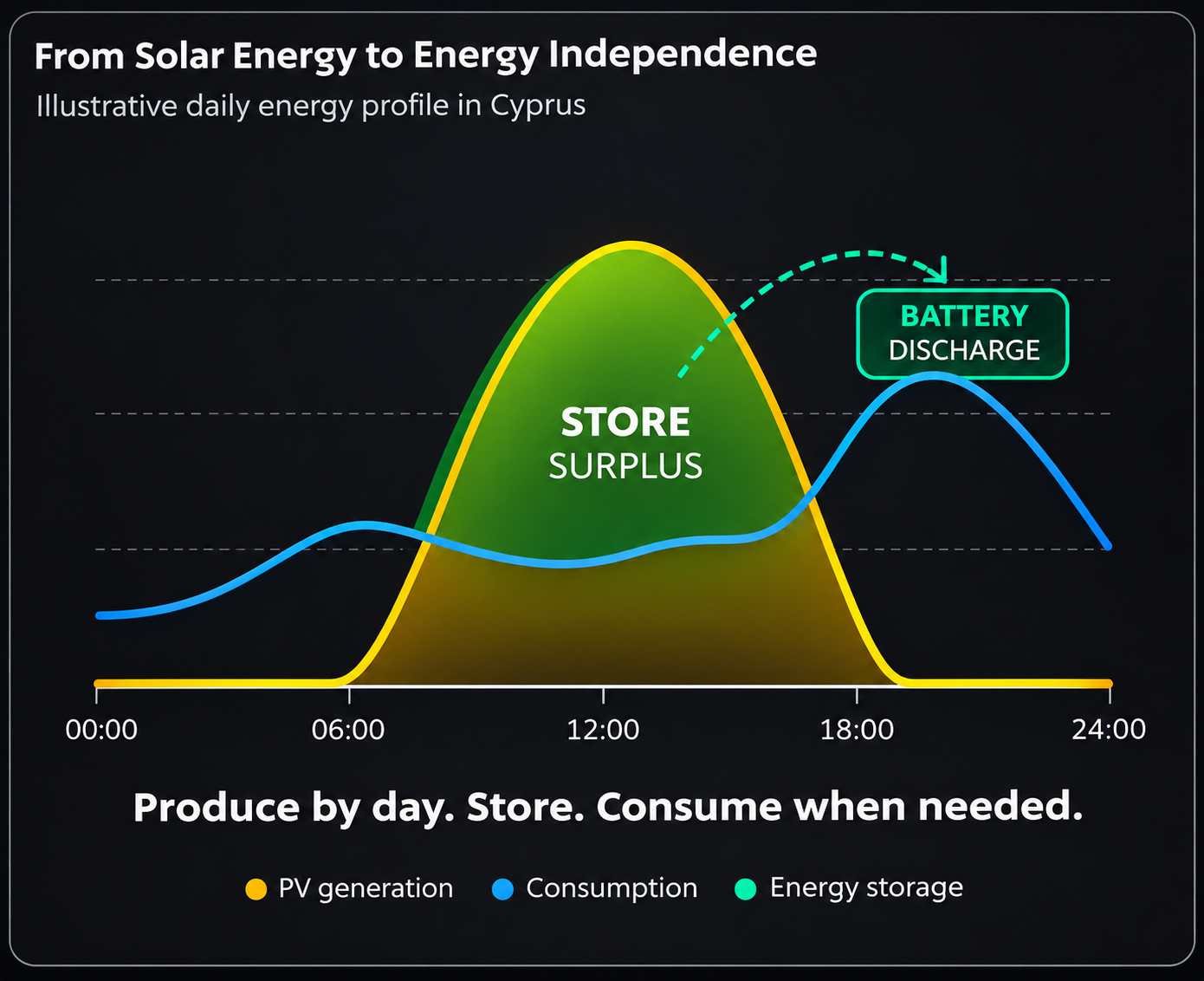
Daily Energy Profile — Cyprus
The Intelligent Energy Ecosystem
PRODUCE → STORE → OPTIMISE → CONSUME
24-Hour Energy Management — Illustrative Operating Sequence
06:00–10:00
Morning
Solar Production Begins
PV generation gradually increases. Solar electricity supports immediate building demand.
Card 1 of 4 — illustrative, not a guaranteed daily operating schedule.
10:00–15:00
Midday
Store & Optimise
HEMS coordinates compatible flexible loads, battery charging and hot water production.
Card 2 of 4 — illustrative, not a guaranteed daily operating schedule.
15:00–18:00
Afternoon
Intelligent Energy Distribution
Available solar energy is intelligently allocated to building demand and flexible electrical loads.
Card 3 of 4 — illustrative, not a guaranteed daily operating schedule.
18:00–06:00
Evening
Consume Stored Energy
Battery storage supports electricity demand subject to available battery capacity and reserve settings.
Card 4 of 4 — illustrative, not a guaranteed daily operating schedule.
Traditional Photovoltaics vs Intelligent Energy Systems
Engineering Consultation
Engineering the Future of Energy
Every building has a different energy profile. Our engineering team can evaluate your requirements and help develop an integrated energy strategy, combining photovoltaics, energy storage and intelligent building technologies.
Contact Our Engineering Team
Interested in this for your building?
Our engineering team is ready to discuss how these solutions can be applied to your project.
Related Articles
All articles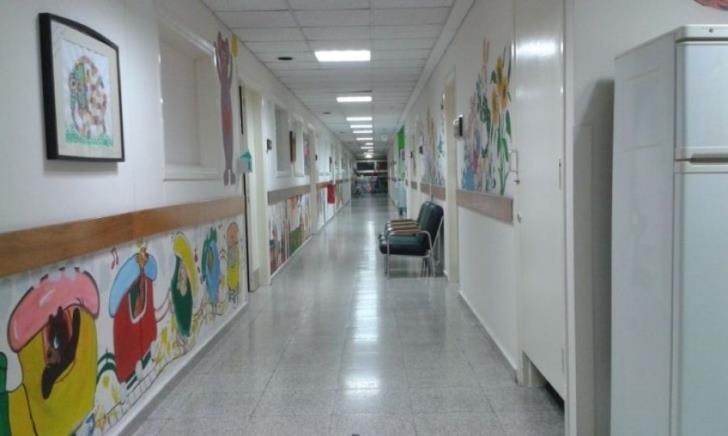
Energon Solutions Contributes to the Renovation of the Paediatric Wards at Makarios Hospital
N.A.S.C Energon Solutions Ltd is proud to participate in the renovation of the Paediatric Wards at Archbishop Makarios III Hospital in Nicosia — delivering comprehensive mechanical installations for a modern, safe, and efficient healthcare environment.
N.A.S.C Energon Solutions Ltd is proud to participate in the renovation of the Paediatric Wards at Archbishop Makarios III Hospital in Nicosia. This project represents a significant contribution to the improvement of healthcare infrastructure in Cyprus, and reflects our commitment to delivering high-quality mechanical engineering solutions in complex, occupied healthcare environments.
The renovation scope covers the complete renewal of mechanical and electrical services within the paediatric ward areas, including HVAC systems designed to meet stringent healthcare ventilation standards, domestic hot and cold water services, medical gas distribution, fire protection systems, and building management and controls integration.
Working within an operational hospital environment presents unique engineering and logistical challenges. Our team has coordinated closely with the hospital management and the main contractor to ensure that all works are carried out with minimal disruption to clinical operations, patient care, and the wellbeing of the children and families using the facility.
Healthcare facilities demand the highest standards of engineering precision. Ventilation systems must maintain strict air change rates, pressure differentials, and filtration standards to protect vulnerable patients. Water systems must be designed and maintained to eliminate the risk of Legionella and other waterborne pathogens. Every element of the mechanical installation must be reliable, maintainable, and compliant with current healthcare engineering guidelines.
This project reinforces our growing portfolio of healthcare sector work across Cyprus. We are committed to supporting the improvement of public healthcare infrastructure and to delivering engineering solutions that contribute directly to better patient outcomes and safer clinical environments.

Contact Our Engineering Team
Interested in this for your building?
Our engineering team is ready to discuss how these solutions can be applied to your project.
Related Articles
All articles
Global Solar PV Installation Growth: What It Means for Cyprus
Global solar photovoltaic capacity is expanding at record pace. We examine the trends driving this growth and what they mean for building owners and developers in Cyprus looking to invest in solar energy.
The global solar photovoltaic industry has entered a period of extraordinary growth. Annual installations have broken records for several consecutive years, driven by falling equipment costs, supportive policy frameworks, and growing awareness of the long-term financial and environmental benefits of solar energy.
For Cyprus, this global trend carries particular significance. The island enjoys one of the highest solar irradiance levels in Europe, making it one of the most favourable locations in the world for photovoltaic investment. A well-designed rooftop solar system in Cyprus can generate substantially more energy per installed kilowatt than equivalent systems in northern European countries.
The falling cost of solar panels and inverters has made photovoltaic systems accessible to a much wider range of building owners. Residential installations, commercial rooftop systems, and large-scale ground-mounted arrays are all growing rapidly. At the same time, the integration of battery storage is becoming increasingly common, allowing building owners to store surplus solar energy for use during the evening and overnight periods.
For building owners and developers in Cyprus, the message is clear. Solar photovoltaic investment is no longer a niche technology for early adopters. It is a mainstream engineering solution that delivers measurable financial returns, reduces dependence on grid electricity, and contributes to the decarbonisation of the built environment.
At Energon Solutions, we design and install photovoltaic systems for residential, commercial, and industrial buildings across Cyprus. Our engineering approach ensures that every system is correctly sized, professionally installed, and optimised for the specific energy requirements of each building.
Contact Our Engineering Team
Interested in this for your building?
Our engineering team is ready to discuss how these solutions can be applied to your project.
Related Articles
All articles
Energy Saving Upgrades: How EU Regulations Are Reshaping Building Retrofits in Cyprus
The EU's Energy Performance of Buildings Directive is driving a wave of building retrofit activity across Europe. We look at what this means for property owners in Cyprus and how mechanical upgrades can deliver significant energy savings.
The European Union's Energy Performance of Buildings Directive (EPBD) is one of the most significant pieces of legislation shaping the built environment across Europe. Its requirements are driving a substantial increase in building retrofit activity, as property owners seek to improve energy performance ratings, reduce operating costs, and comply with evolving regulatory standards.
In Cyprus, the implications are significant. A large proportion of the existing building stock was constructed before modern energy performance standards were introduced. Many of these buildings operate with outdated HVAC systems, poor thermal insulation, and limited controls — all of which contribute to unnecessarily high energy consumption and operating costs.
Mechanical system upgrades represent one of the most effective routes to improving building energy performance. Replacing an ageing chiller or boiler with a modern, high-efficiency heat pump can reduce heating and cooling energy consumption by 40–60% in many cases. Upgrading ventilation systems with heat recovery units reduces the energy required to condition fresh air. Installing variable speed drives on pumps and fans eliminates the energy waste associated with fixed-speed operation.
Building automation and controls upgrades are equally important. Many older buildings operate with simple on/off controls that provide no ability to optimise system operation based on occupancy, weather conditions, or time of day. Modern building management systems can reduce energy consumption by 15–30% through improved scheduling, setpoint optimisation, and fault detection.
At Energon Solutions, we carry out detailed energy audits to identify the most cost-effective upgrade opportunities for each building. Our engineering team designs and installs mechanical upgrades that deliver measurable improvements in energy performance, occupant comfort, and operating costs — while ensuring full compliance with current and forthcoming regulatory requirements.
Contact Our Engineering Team
Interested in this for your building?
Our engineering team is ready to discuss how these solutions can be applied to your project.
Related Articles
All articles
Battery Energy Storage Solutions for Commercial and Residential Buildings in Cyprus
Battery energy storage is transforming how buildings manage electricity in Cyprus. We explain the technology, the benefits, and the engineering considerations that determine whether a storage system will deliver on its promise.
Battery energy storage systems are rapidly becoming a standard component of modern building energy installations in Cyprus. Falling battery costs, improving technology, and the changing economics of solar energy export have all contributed to growing demand for storage solutions across residential, commercial, and industrial sectors.
The fundamental purpose of a battery storage system is straightforward: store surplus energy when it is available and inexpensive, and release it when it is needed and more costly. In a building with a photovoltaic system, this typically means storing solar energy generated during the middle of the day for use during the evening and overnight periods.
However, the engineering reality is more complex. Battery systems vary significantly in their chemistry, capacity, power output, cycle life, efficiency, and safety characteristics. Lithium iron phosphate (LFP) batteries have become the dominant technology for building applications due to their excellent safety profile, long cycle life, and stable performance across a wide range of operating temperatures.
Correct system sizing is critical. An undersized battery will fill quickly and fail to capture all available surplus solar energy. An oversized battery will be underutilised and will not deliver an acceptable financial return. The correct capacity depends on the building's hourly electricity consumption profile, the size of the photovoltaic system, the desired level of energy independence, and the economics of grid electricity tariffs.
At Energon Solutions, we design battery storage systems as part of a complete building energy strategy. We analyse each building's energy consumption data, model the performance of different storage configurations, and design systems that are correctly sized, safely installed, and integrated with the building's photovoltaic and management systems.
Contact Our Engineering Team
Interested in this for your building?
Our engineering team is ready to discuss how these solutions can be applied to your project.
Related Articles
All articles
EU Climate Neutrality 2050: What It Means for Buildings and MEP Engineers in Cyprus
The EU's commitment to climate neutrality by 2050 is reshaping building regulations, energy standards, and engineering practice across Europe. We examine the implications for building owners, developers, and MEP engineers in Cyprus.
The European Union's commitment to achieving climate neutrality by 2050 is one of the most ambitious policy objectives in the history of European integration. The buildings sector — which accounts for approximately 40% of total EU energy consumption and 36% of energy-related greenhouse gas emissions — is central to achieving this target.
For Cyprus, the implications are significant and immediate. The island's building stock is predominantly older, with many buildings constructed before modern energy performance standards were introduced. Achieving the EU's climate neutrality objectives will require a substantial programme of building renovation, system upgrades, and the integration of renewable energy technologies.
The revised Energy Performance of Buildings Directive (EPBD) introduces minimum energy performance standards for existing buildings, requirements for zero-emission new buildings, and obligations to phase out fossil fuel heating systems. These requirements will progressively tighten over the coming years, creating both regulatory obligations and investment opportunities for building owners across Cyprus.
For MEP engineers, the transition to climate neutrality represents a fundamental shift in engineering practice. Heat pumps are replacing gas and oil boilers as the primary heating technology. Photovoltaic systems and battery storage are becoming standard components of new and renovated buildings. Building automation and energy management systems are essential tools for optimising energy performance and demonstrating regulatory compliance.
At Energon Solutions, we are committed to supporting our clients through this transition. Our engineering team designs and delivers mechanical systems that meet current regulatory requirements, anticipate future standards, and deliver measurable improvements in energy performance and operating costs.
Contact Our Engineering Team
Interested in this for your building?
Our engineering team is ready to discuss how these solutions can be applied to your project.
Related Articles
All articles
Hybrid Renewable Energy Systems: Combining Solar, Storage and Smart Controls
Hybrid renewable energy systems — combining solar photovoltaics, battery storage, and intelligent controls — are setting a new standard for building energy performance in Cyprus. We explain how these integrated systems work and what they can deliver.
The term 'hybrid renewable energy system' refers to an integrated installation that combines two or more complementary energy technologies — most commonly solar photovoltaics, battery energy storage, and intelligent building controls — to optimise energy performance across a building or site.
In Cyprus, the combination of high solar irradiance, rising electricity costs, and evolving grid compensation mechanisms makes hybrid systems particularly attractive. A well-designed hybrid system can dramatically reduce a building's dependence on grid electricity, improve energy resilience, and deliver a strong financial return over its operational lifetime.
The photovoltaic array generates electricity from sunlight. The battery storage system captures surplus generation for later use. The hybrid inverter manages the flow of energy between the solar array, the battery, the building's electrical loads, and the grid. The energy management system coordinates all of these components, optimising their operation based on real-time data, forecasts, and user-defined priorities.
The integration of heat pumps into a hybrid system adds another dimension of optimisation. Heat pumps can be scheduled to operate during periods of high solar generation, using surplus photovoltaic energy to produce heating, cooling, or domestic hot water at minimal cost. Electric vehicle charging can similarly be coordinated with solar generation and battery availability.
At Energon Solutions, we design hybrid renewable energy systems as complete, integrated engineering solutions. We assess each building's energy requirements, model the performance of different system configurations, and design installations that are correctly sized, professionally installed, and optimised for long-term performance.
Contact Our Engineering Team
Interested in this for your building?
Our engineering team is ready to discuss how these solutions can be applied to your project.
Related Articles
All articles
The Smart Readiness Indicator: How Smart Is Your Building?
The EU's Smart Readiness Indicator (SRI) provides a framework for assessing how well a building's technical systems can respond to the needs of occupants and the grid. We explain what the SRI means for building owners in Cyprus.
The Smart Readiness Indicator (SRI) is a European Union assessment scheme that measures the capability of a building's technical systems to adapt their operation in response to the needs of occupants, the building itself, and the electricity grid. Introduced under the Energy Performance of Buildings Directive, the SRI is designed to complement traditional energy performance certificates by capturing the 'smartness' of a building's installed systems.
A building's SRI score is determined by assessing its technical systems across seven impact domains: energy efficiency, maintenance and fault prediction, comfort, convenience, health and wellbeing, information to occupants, and grid interaction and storage. Each domain is assessed across multiple technical services, including heating, cooling, ventilation, domestic hot water, lighting, electric vehicle charging, and building automation.
For building owners in Cyprus, the SRI has practical implications. Buildings with higher SRI scores are better positioned to benefit from demand response programmes, time-of-use electricity tariffs, and the integration of renewable energy and storage technologies. As smart grid infrastructure develops in Cyprus, the ability of buildings to interact intelligently with the grid will become increasingly valuable.
Improving a building's SRI score typically involves upgrading building automation and controls systems, installing smart metering and monitoring equipment, integrating renewable energy and storage technologies, and implementing demand response capabilities. Many of these upgrades also deliver direct energy savings and improved occupant comfort.
At Energon Solutions, our building automation and controls engineering team designs and installs systems that improve both energy performance and smart readiness. We help building owners understand their current SRI position and identify the most cost-effective upgrade pathways to improve their building's performance and future-readiness.
Contact Our Engineering Team
Interested in this for your building?
Our engineering team is ready to discuss how these solutions can be applied to your project.
Related Articles
All articles
Solar Thermal Energy in Europe: Trends and Opportunities for Cyprus
Solar thermal technology continues to play an important role in reducing building energy consumption across Europe. We examine current trends and the opportunities for integrating solar thermal systems in Cyprus's built environment.
Solar thermal technology — which uses sunlight to heat water directly, rather than generating electricity — has been a well-established component of building energy systems in Cyprus for many decades. The island's exceptional solar resource makes it one of the most cost-effective locations in Europe for solar thermal investment.
Across Europe, solar thermal capacity continues to grow, driven by the need to reduce fossil fuel consumption in the heating sector and to comply with increasingly stringent building energy performance requirements. In many European countries, solar thermal systems are now mandatory components of new residential and commercial buildings.
In Cyprus, solar water heating systems are already widely deployed in the residential sector. The opportunity for growth lies in the commercial, hospitality, and healthcare sectors, where large volumes of domestic hot water are required and the economics of solar thermal investment are particularly favourable.
Modern solar thermal systems can be integrated with heat pump technology to create highly efficient hybrid hot water systems. During periods of high solar irradiance, the solar thermal collectors provide the majority of the heating energy. During periods of low solar availability, the heat pump supplements the solar input, maintaining reliable hot water supply at minimal energy cost.
At Energon Solutions, we design and install solar thermal systems for residential, commercial, and hospitality buildings across Cyprus. Our engineering team ensures that every system is correctly sized, professionally installed, and integrated with the building's existing mechanical services for optimal performance and reliability.
Contact Our Engineering Team
Interested in this for your building?
Our engineering team is ready to discuss how these solutions can be applied to your project.
Related Articles
All articles
AI and HVAC: How Artificial Intelligence Is Improving Building Efficiency and Comfort
Artificial intelligence is beginning to transform how HVAC systems are controlled and optimised in commercial buildings. We examine the practical applications of AI in building services engineering and what they mean for building owners in Cyprus.
Artificial intelligence is no longer a technology of the future in building services engineering. AI-driven optimisation tools are already being deployed in commercial buildings to improve HVAC system efficiency, enhance occupant comfort, and reduce energy consumption — often delivering results that traditional rule-based control systems cannot match.
Traditional HVAC control systems operate on fixed schedules and setpoints. They heat or cool a space to a target temperature, regardless of whether the space is occupied, how many people are present, or what the weather forecast predicts for the next few hours. This approach is simple and reliable, but it is not efficient.
AI-driven building management systems take a fundamentally different approach. They learn from historical data — occupancy patterns, weather conditions, system performance, energy consumption — and use this learning to predict future conditions and optimise system operation in advance. Rather than reacting to conditions as they occur, an AI-driven system anticipates them.
The practical benefits are significant. AI optimisation can reduce HVAC energy consumption by 15–30% in many commercial buildings, while simultaneously improving occupant comfort by maintaining more consistent temperature and air quality conditions. Fault detection and diagnostics capabilities can identify equipment performance degradation before it leads to system failure, reducing maintenance costs and improving reliability.
At Energon Solutions, we integrate advanced building automation and controls systems that lay the foundation for AI-driven optimisation. Our engineering team designs BMS installations that capture the data quality and system integration necessary to support intelligent building management — both today and as AI optimisation tools continue to mature.
Contact Our Engineering Team
Interested in this for your building?
Our engineering team is ready to discuss how these solutions can be applied to your project.